Which Seattle Underground Tour Should You Book?
Two companies run Seattle Underground tours, and they show different tunnels. Compare 2026 prices, group sizes, stairs and booking rules before you buy.
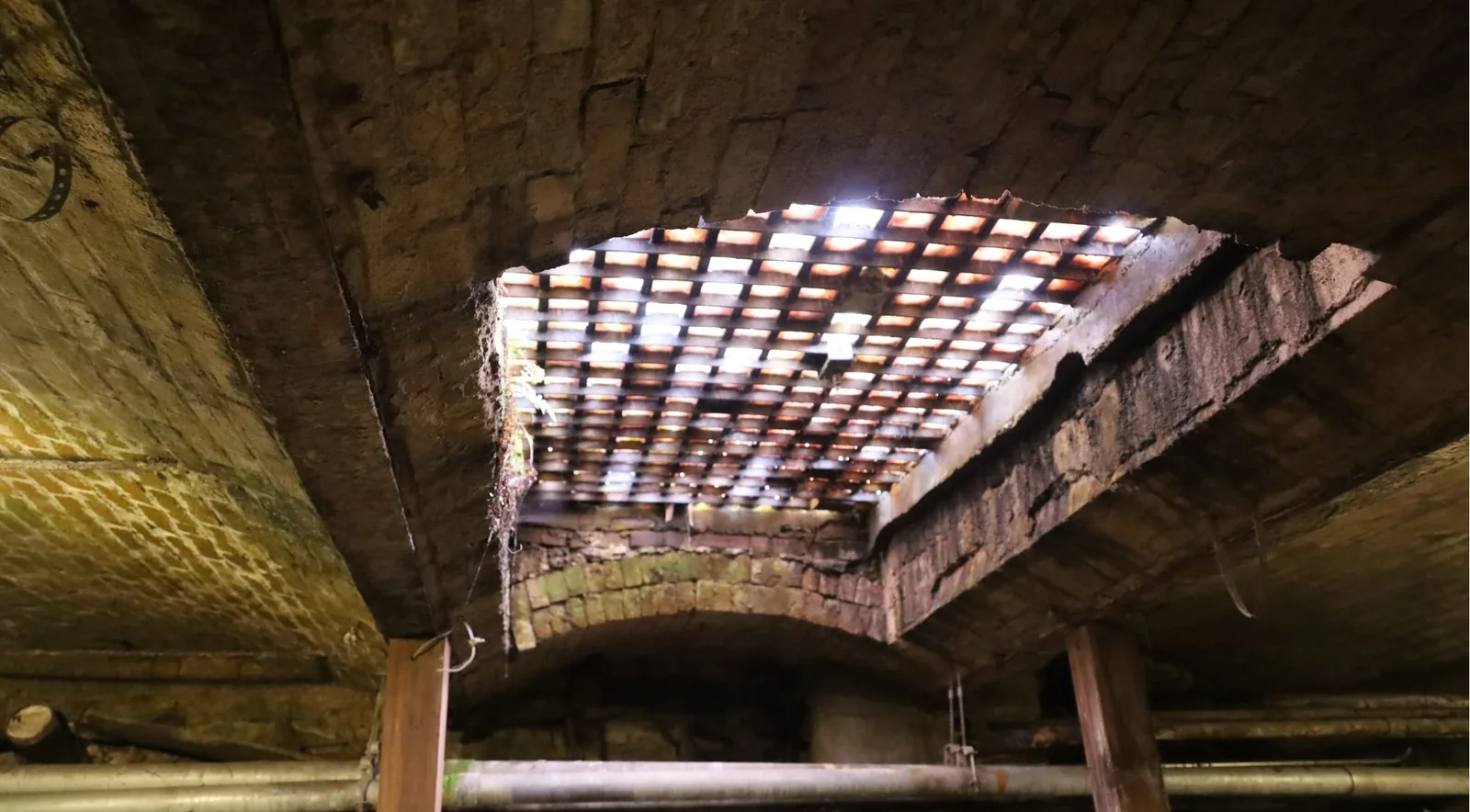
Short answer: there are two Seattle Underground tours, run by different companies, and they take you through different tunnels. Bill Speidel’s is the original — bigger groups, funnier, and you can usually walk up and join within the hour. Beneath the Streets caps every departure at 25 people and plays it straight as history, but you need to book ahead. They cost within a dollar or two of each other, so price is not the deciding factor. Group size and tone are.
The two tours at a glance
| Bill Speidel’s Underground Tour | Beneath the Streets | |
|---|---|---|
| Running since | 1965 | 2013 |
| Length | 75 minutes | 60 minutes |
| Group size | No published cap — reviewers report 30–46 | Hard cap of 25 |
| Style | Comic, anecdotal | Unscripted, history-first |
| Adult ticket | $30.00 at checkout | About $30–31 all-in |
| Booking | Walk up — 9 departures daily | Book ahead — sells out |
| Starts at | 614 First Avenue | 102 Cherry Street |
Because the two companies hold access to different basements, doing both is not as redundant as it sounds. Beneath the Streets says its three passageways “have never been included in previous underground tours” — they were reopened when the company launched in 2013. Locals routinely recommend both, and they are right to.
One thing worth knowing before you compare reviews: Bill Speidel’s barely sells through booking sites at all. It sells from its own site, by phone, and at its First Avenue counter. So the listing you found in an app — including the one on this site — is Beneath the Streets. Review counts across booking platforms measure how widely a tour is distributed, not how good it is.
Other experiences you might enjoy
Pioneer Square is a five-minute walk from the waterfront, Pike Place Market and the ferry terminal. Pair the underground with a Space Needle visit or an Argosy harbor cruise for a full day.
What you actually see down there
Both tours walk you through the buried original street level of 1890s Seattle: brick and stone retaining walls, timber shoring, old doorway and sidewalk lines, and the underside of the pavement vaults. The modern city sits roughly twenty feet overhead.
Set your expectations on one point, because it is the most common disappointment in both companies’ reviews: you are not underground the whole time. Both tours surface repeatedly and walk street-level Pioneer Square between sections. Bill Speidel’s descends into three sections across about three blocks; Beneath the Streets covers four blocks and three passageways, and is explicit that it means to show the neighborhood “from both the original and current street levels”. Roughly half your time is above ground. It is a Pioneer Square history walk that goes below the street three times, not a tunnel crawl.
The tone splits sharply. Bill Speidel’s has traded on wisecracking delivery since 1965 and leans hard on the jokes — some reviewers find them dated, and guide quality is the single biggest variable in whether people rate it five stars or two. Beneath the Streets is unscripted, with each guide writing their own tour, and covers 1890s architecture, the Klondike Gold Rush, Skid Row and the Coast Salish peoples. It is explicitly not a comedy tour and explicitly not a ghost tour. If it was the ghosts you came for, Seattle’s ghost tours compares the separate walks that do that job, and explains why none of the well-reviewed ones goes underground.
Why there is a city under the city
On 6 June 1889, a glue pot boiled over in Victor Clairmont’s cabinet shop, in the basement of the Pontius Building on Front Street — First Avenue today. A 24-year-old cabinetmaker’s assistant had been heating glue over a gasoline fire; it caught the wood chips and turpentine on the floor. Seattle was wood-planked streets and wooden buildings served by a private water system that could not hold pressure, and when crews turned to Puget Sound for water, the tide was out. Roughly thirty blocks of downtown burned.
Rebuilding, the city took the chance to fix a drainage problem that had made the old street level miserable — at high tide, the plumbing ran backwards. Streets were regraded a full storey higher, but the new buildings went up before the streets were finished, so for years pedestrians walked at the old level and climbed ladders to cross the road. When the sidewalks were finally decked over, the original storefronts became the passages you now walk through. They were sealed for public use in 1907, during a typhoid scare.
Two details are worth correcting because they circulate widely: the fire did not start in a paint shop, and the 1907 closure was typhoid, not bubonic plague.
You can see a piece of this for free. The amethyst-coloured glass prisms set into Pioneer Square’s sidewalks are the skylights that lit the buried pavements below.
What it costs
Bill Speidel’s is $30.00 for an adult at the checkout, with $27.00 for seniors, students and military ID holders, $20.00 for youth aged 7 and up, and $10.00 for children 6 and under. If you have seen $22 quoted elsewhere, that figure is out of date — as is the $26 that some 2026 guides carry.
Beneath the Streets is the one to watch, because its advertised prices exclude tax and 15.35% is added at checkout. That single fact explains why one listing says $26 and another says $32 for the same 60-minute tour. Its own website currently shows two different standard prices, so treat the all-in adult fare as roughly $30 to $31 rather than any single advertised number. Booked as the Guided Underground Walking Tour on GetYourGuide it runs from $31, rated 4.6 from 2,620 reviews; the same tour sells on Viator as Beneath The Streets from $32, rated 4.7 from 9,290 combined Viator and Tripadvisor reviews. The gap in review counts is distribution, not quality — Viator has simply been selling it to more people for longer.
Concession rates are where booking direct genuinely pays: educator and military rates — the military tier covers active, retired or family with ID — exist only on the operator’s own site. One widely repeated claim is wrong, though: under-7s are not free. The ladder bottoms out at $5 for toddlers aged 2 to 6. “Children under 7 are welcome” means welcome, not free.
For a full-fare adult the direct saving is a dollar or two at most, and there is a reason you might give that up. Bill Speidel’s direct policy is no refunds except when it cancels, with no late admission. Beneath the Streets publishes no direct cancellation policy at all, but the same tour carries free cancellation up to 24 hours ahead when booked through GetYourGuide. About a dollar buys you the ability to change your mind.
Walk up, or book ahead?
This is the real decision, and the two operators are opposites.
Bill Speidel’s runs nine departures a day, on the hour from 10am to 6pm, every day of the year except Thanksgiving and Christmas. Tickets are first come, first served and sold at the booth until a tour starts, so a full slot usually means waiting an hour rather than missing out.
There is a wrinkle that costs people tours. From June to September the company adds half-hourly departures — and sells them only at the box office. They do not appear online at all. If you check the website on a July afternoon and see nothing available, there may well be a tour leaving in thirty minutes that only exists at 614 First Avenue.
Beneath the Streets is the reverse. A 25-person cap across a 10am–5pm window is a fraction of that capacity, and its own FAQ says tours often sell out. Here, a sold-out slot frequently means no tour that day. Book it in advance.
How far in advance depends on the day. For an ordinary weekday outside the summer peak you can often find space within a few days. Book earlier for summer weekends, cruise-ship days, October weekends, holiday periods — and for any wet day, because a rainy forecast sends a lot of people looking for the same indoor hour at the same time.
Stairs, lighting, and who should skip it
Neither tour is wheelchair accessible. Beneath the Streets counts six flights of stairs with no elevator, and its ticket office is itself below street level down an outdoor staircase. The reason is the buildings: alterations in the Pioneer Square Preservation District need design-review approval, which makes the necessary structural work impracticable rather than merely expensive.
The ground underfoot is uneven, and the lighting is — in the operator’s own words — spotty, with dim stretches falling exactly where the footing is worst. Ceilings drop low enough in places that taller visitors duck. Wear flat, grippy shoes you do not mind getting dusty; the official advice is to leave the heels at home. It is cool and damp down there year-round, so carry a layer even in August. There are no toilets on either route.
For children, permitted is not the same as suitable — and Beneath the Streets says as much itself, noting that children may struggle with an hour of history. Realistically, eight to ten is the floor. Below that, dim light, stairs and a lot of standing still tend to win.
A word on the neighborhood, since it drives a large share of both tours’ negative reviews: Pioneer Square is Seattle’s oldest and handsomest district, and it is also a focal point for the city’s visible street homelessness and drug use. Both meeting points sit inside that area, and the above-ground portions walk through it.
It is not on any Seattle pass
Neither underground tour is covered by any Seattle attraction pass. The Seattle CityPASS bundles the Space Needle and Aquarium plus three choices from Chihuly, an Argosy harbor cruise, MoPOP, Woodland Park Zoo and the Pacific Science Center — no walking tour of any kind. Seattle C3 covers any three of ten attractions, and the underground is not among them. Go City does not operate in Seattle.
Multi-stop day tours are the one place to read carefully. Some list “admission to Beneath the Streets” and genuinely include the tour; others promise “a taste of the Seattle Underground”, which means an abbreviated look, not the real thing. If the inclusions do not name admission, assume you are not getting it.
After dark, and adults only
Beneath the Streets runs an 18+ After Hours tour of Pioneer Square’s red-light history, at 75 minutes and around $28 before tax, on weekend evenings in peak season. It also runs a Queer Underground History Tour covering the district’s early LGBTQ+ nightlife — the only tour of its kind in the city, monthly in winter and more often through summer.
Bill Speidel’s still runs its Underworld Tour nightly at 8pm and 9pm, at $42.76 with a cocktail included — though you would not know it from the website, which does not list it. If you want it, go through the booking store or call. Its old Paranormal Experience is gone.
Can I do both Seattle Underground tours?
Yes, and it’s not as repetitive as it sounds — Bill Speidel’s and Beneath the Streets hold access to different basements under Pioneer Square, so you see different passageways with each. Book Beneath the Streets in advance since it sells out, then walk up to Bill Speidel’s same-day; the two together run about two and a quarter hours combined.
Is it really an underground city?
Not in the way the phrase makes it sound, and this is the expectation worth resetting before you buy.
There are no miles of continuous streets hidden beneath modern Seattle. What survives are separate stretches of the 1890s street level — old storefronts, doorways and the sidewalk vaults under the pavement — sitting below buildings in a few blocks of Pioneer Square. Both tours walk you through three such sections and surface between them.
That does not make the spaces fake. They are the real historic city, and roughly twenty feet of modern Seattle is sitting on top of them. It does mean the phrase “underground city” is doing a lot of work that the site itself cannot do, which is also why the guide matters more here than at most attractions. Without the rebuilding story, a lot of what you are looking at would read as old brick walls and dark rooms.
If your only measure is minutes below the pavement, the two tours are closer than their durations suggest. Bill Speidel’s 75 minutes and Beneath the Streets’ 60 both split roughly half and half between the passageways and the streets above them.
Is it scary, and is it claustrophobic?
It is not scary. Both standard tours are history walks, nothing jumps out at you, and neither is designed around a fright. If frightening stories are what you came for, book a ghost walk instead.
Claustrophobia is a fairer question, and the answer is probably less than the word “underground” suggests. These are old passageways and basement-like rooms, and nothing on either route asks you to crawl. You are still below street level in enclosed historic spaces with dim, patchy lighting, and ceilings drop low enough in places that taller visitors duck. Anyone who genuinely struggles with that should look at photographs before booking and decide honestly.
For most people the stairs and the uneven ground are the bigger practical obstacle than the size of the rooms. Beneath the Streets counts six flights with no elevator, and Bill Speidel’s describes its own route as moderately rugged.
The rainy-day case, and its limit
Seattle’s underground is one of the better wet-weather attractions in the city, and one caveat comes attached: underground is not the same as indoors.
You walk street-level Pioneer Square between the underground sections, so a waterproof jacket still matters. What the tour does give you is an attraction that poor visibility cannot spoil. Unlike the Space Needle, a harbor cruise or a Mount Rainier day trip, nothing about it depends on seeing something in the distance.
That is why it earns its place from October through spring, when the forecast stops cooperating. Our guide to the best time to visit Seattle’s attractions sets out how much rain each month actually brings.
Underground or ghost tour for Halloween?
If you specifically want ghosts, neither standard underground tour is a ghost tour. Beneath the Streets says so in plain terms, and Bill Speidel’s is history with jokes.
The underground still works well in late October, because the setting does the atmospheric work without anyone having to claim a haunting. If you like eerie places but do not believe in ghosts, it is arguably the better Halloween booking of the two kinds.
The best late-October combination is both: the underground in the afternoon, then a ghost walk after dark once the sun has gone down around half past six. Sinister Sins, Scandal, and Shadows is the usual starting point at about an hour from $26, rated 4.4 from 536 combined reviews. Seattle’s ghost tours compares the shortlist properly, and what to book in Seattle in October puts both into a full month’s itinerary.
Underground tour or Space Needle?
They answer completely different questions, so the weather usually settles it for you.
Choose the Space Needle and Chihuly Garden and Glass Ticket — from $77.98, rated 4.7 from 2,761 reviews — for the classic skyline and the view over Puget Sound. Choose the underground if you care more about how the city came to be shaped this way, and you would rather not gamble on visibility.
On a first visit with enough time, do both; they take up different parts of a day. When the forecast is poor and the Space Needle is disappearing into cloud, the underground is the safer booking of the two. Space Needle tickets covers the Day/Night option and the timed-entry rules.
Underground tour or a Pike Place food tour?
Again, two different trips; neither is the better one.
The underground is for history. The Pike Place Market Chef-Guided Food Tour — about two hours from $75, rated 4.9 from 1,117 reviews — is for food and a more sociable morning. Both hold up in poor weather and neither takes more than a small part of the day.
They also combine easily. Do the underground in Pioneer Square, then head north to the market. Our Seattle city tours guide compares the walking, food and bus formats if you are still choosing between them.
How far the underground is from Pike Place Market
Pioneer Square sits south of Pike Place Market, and the two are close enough to do on the same sightseeing day — about a 20-minute walk, or a few minutes on the light rail between Pioneer Square and Westlake.
What you should not do is run straight from one timed tour into another. Leave a buffer for the walk, for checking in, and for Pioneer Square itself, which deserves more than the hour you booked. The waterfront, Smith Tower and the free Klondike Gold Rush National Historical Park museum are all within a few blocks, which makes the underground easy to slot into a downtown day rather than build one around.
Is the Seattle Underground tour worth it?
It is worth it if you want the context behind what you are looking at.
The physical spaces are interesting on their own, but the reason the hour works is the story: Seattle burned in June 1889, rebuilt in brick at speed, regraded its streets a full storey higher to fix the drainage, and effectively abandoned its previous street level. A guide is what connects a cellar-looking passage to the pavement directly above your head.
On a first visit it also shows you a side of the city that the Space Needle, the waterfront and Pike Place Market do not.
Who should book it
Book an underground tour if you like city history, want something other than standard sightseeing, need a wet-weather hour, are visiting in fall or winter, enjoy unusual architecture, or only have an hour or two free.
Who might skip it
Skip it if you strongly dislike enclosed underground spaces, cannot comfortably manage stairs and uneven ground, want a scenic attraction with a view, expect a haunted-house experience, or expect miles of continuous tunnel.
The bottom line
Turning up on the day, traveling with a group, or after an entertaining hour? Bill Speidel’s. Planning ahead, sensitive to crowds, hard of hearing, or actually there for the history? Beneath the Streets, booked in advance.
If Seattle has thrown a wet afternoon at you, either works — just remember you will be outside for part of it. And if the stairs rule you out, the free Klondike Gold Rush National Historical Park museum two blocks away covers much of the same history at street level, Wednesday to Sunday. For planning the rest of your trip around the weather, see our guide to the best time to visit Seattle attractions.
Common questions
Beneath the Streets for most visitors: 60 minutes, a hard cap of 25 people, history instead of jokes, and bookable online — from $31 on GetYourGuide, rated 4.6 from 2,620 reviews, or 4.7 from 9,290 on Viator. Book Bill Speidel's instead if taking Seattle's original underground tour matters to you, or if you would rather have comic storytelling than straight history. It has run since 1965, lasts 75 minutes, and sells mainly from its own counter at 614 First Avenue.
Not in the way the phrase suggests. There are no miles of continuous streets hidden under modern Seattle. What survives are separate stretches of the 1890s street level — old storefronts, doorways and sidewalk vaults — beneath buildings and pavements in Pioneer Square. Both tours walk you through three such sections and surface between them, so roughly half your time is above ground.
About half. Bill Speidel's descends into three sections across roughly three blocks in 75 minutes; Beneath the Streets covers four blocks and three passageways in 60 minutes and says openly that it shows Pioneer Square from both the original and the current street levels. If your only measure is minutes below the pavement, the two tours are closer than their durations suggest.
Neither tour is designed to frighten anyone — they are history walks, not haunted houses, and nothing jumps out at you. The spaces are old passageways and basement-like rooms; nobody crawls anywhere. They are dim, cool and enclosed, ceilings drop low enough in places that taller visitors duck, and the footing is uneven. If enclosed dim spaces genuinely bother you, look at photographs before you buy. For most people the stairs are the bigger obstacle.
It is one of the better ones, with a caveat: underground does not mean indoors. You walk street-level Pioneer Square between the underground sections, so bring a waterproof jacket. What it does give you is an attraction that poor visibility cannot spoil — unlike the Space Needle, a harbor cruise or a Mount Rainier day trip, nothing about it depends on a distant view. That makes it useful from October through spring.
It suits the season without being a ghost tour. Beneath the Streets is explicit that it is history rather than paranormal storytelling, and Bill Speidel's trades in jokes. The setting does the atmospheric work, which makes the underground the better choice if you like eerie places but do not believe in ghosts. A good late-October combination is the underground in the afternoon and a ghost walk after dark, once the sun is down by about 6:30 p.m.
For an ordinary weekday outside summer you can often book Beneath the Streets within a few days. Book earlier for summer weekends, cruise-ship days, October weekends, holiday periods and any wet day when everyone's outdoor plans collapse at once — its 25-person cap means a sold-out slot usually means no tour that day. Bill Speidel's is the walk-up option: nine departures daily, first come, first served.
It is worth it if you want the story rather than another photo stop. The passageways themselves are interesting; what makes the hour work is understanding that Seattle burned in 1889, rebuilt fast, regraded its streets a full storey higher and left its previous street level behind. Skip it if you dislike enclosed underground spaces, cannot manage six flights of stairs and uneven ground, want a scenic attraction, or expect either a haunted house or miles of tunnel.
See Seattle for Less — One Pass, Five Top Attractions
Seattle CityPASS bundles the Space Needle, Seattle Aquarium, an Argosy harbor cruise, and your choice of top attractions into one mobile ticket — rated 4.7/5 by 800+ travelers and saving up to 47% off the gate. Free cancellation.
Check CityPASS Prices